

Proven for Professional Athletes. Proven For You.
Creatine for Seniors: Muscle, Brain & Healthy Aging Support
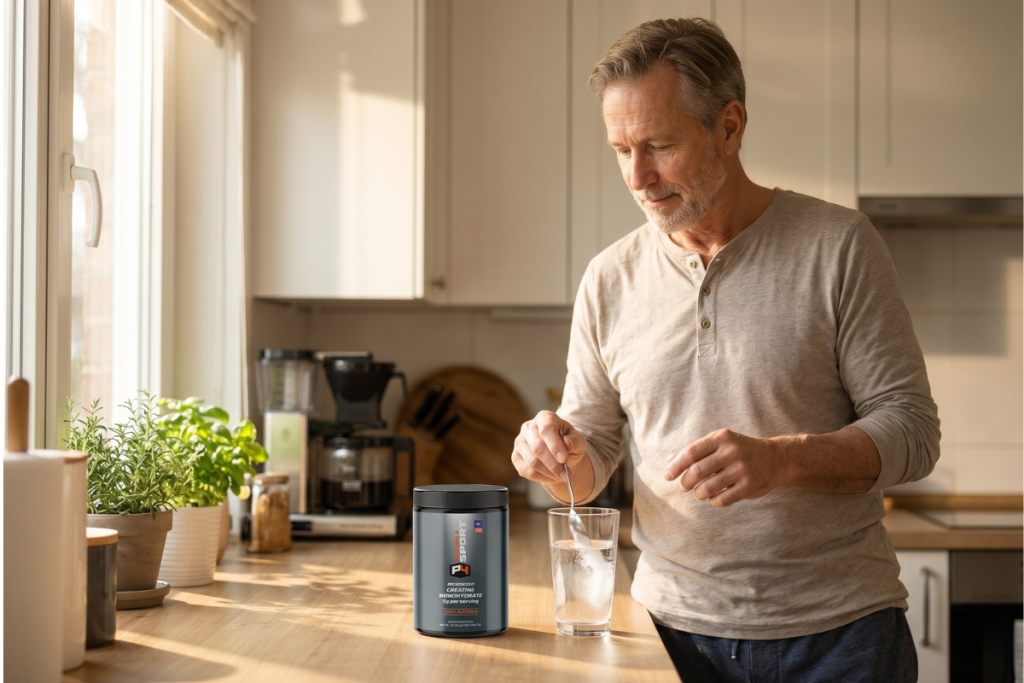
Most people hear “creatine” and picture a 25-year-old at the gym trying to add muscle. But creatine for seniors is one of the fastest-growing conversations in nutrition research right now — and for good reason.
Creatine monohydrate is one of the most researched supplements in the world. A growing body of peer-reviewed evidence suggests it may be just as valuable — if not more so — for adults over 50. Not for building a bodybuilder physique. For preserving the strength, energy, and mental sharpness that makes everyday life feel good. If you have dismissed creatine as something only for athletes, this article is worth reading.
Quick Takeaways
- Creatine monohydrate is one of the most studied supplements for healthy aging
- Research suggests it may support muscle strength, brain energy, and physical performance after 50
- A simple 5g daily dose — no loading phase required — is commonly used in studies
- You do not need to go to a gym to benefit — walking, golf, and everyday activity are enough
- Combining creatine with any regular physical activity may provide the strongest benefits
- Quality matters: look for NSF Certified for Sport® to ensure label accuracy and purity
Who This Is For
This blog is written for:
- Active adults over 50 who want to maintain strength and energy as they age
- Golfers, walkers, hikers, and cyclists looking for an edge that does not require the gym
- Women after menopause concerned about muscle and bone loss
- Adults experiencing brain fog or mental fatigue who want a researched, natural option
- People concerned about muscle loss (sarcopenia) and long-term physical independence
- Anyone who wants a clean, third-party-tested supplement with no hidden ingredients
- Skeptics who assumed creatine was only for bodybuilders
Many adults over 50 initially assume creatine is only for athletes or weightlifters. But research and real-world experience continue to show growing interest in creatine specifically for healthy aging, energy support, and muscle preservation — from people who have never set foot in a gym.
For over 13 years, Proven4 has focused on NSF Certified for Sport® supplements trusted by professional and collegiate athletes across MLB, NFL, NHL, NBA, PGA, and LPGA — and by everyday active adults who simply want to know exactly what is in their supplement.
What Is Creatine and How Does It Work?
Creatine is a naturally occurring compound your body produces from amino acids. It is stored primarily in your muscles and brain, where it is used to regenerate ATP — adenosine triphosphate — your body’s primary fuel source for muscle contractions, short bursts of energy, and brain activity.
Your body makes some creatine on its own. You also get small amounts from eating meat and fish. But as you age, your natural creatine stores decline — and for people who eat little or no meat, baseline levels can be significantly lower to begin with.
Supplementing with creatine monohydrate is a simple, well-researched way to restore and maintain those stores — supporting your muscles and your brain from the inside out.
What Happens to Your Body After 50 — and Why Creatine Matters
Understanding why creatine is particularly relevant for older adults starts with understanding what naturally changes in the body as we age.
Muscle Loss (Sarcopenia)
Starting around age 30, adults naturally begin losing muscle mass — a condition called sarcopenia. By age 60, this loss can be significant enough to affect strength, balance, and the ability to do everyday tasks like climbing stairs, carrying groceries, or playing 18 holes of golf.
Sarcopenia is not inevitable, but it requires attention. According to a 2025 review published in the Journal of the International Society of Sports Nutrition, creatine monohydrate supplementation combined with resistance training has meaningful benefits in older adults and may have direct application for managing age-related sarcopenia, osteoporosis, and frailty.
Bone Density
Bone loss accelerates after 50 — particularly in women after menopause. Research included in a 2025 narrative review published in Frontiers in Nutrition found that creatine supplementation, especially when combined with exercise, supports aging muscle and bone — making it a relevant consideration for adults focused on long-term physical resilience.
Brain Energy and Cognitive Function
Your brain requires a constant, steady supply of energy. Creatine plays a direct role in how brain cells produce and replenish that energy.
A review published in PMC/NIH found that creatine’s influence on brain energy metabolism may support neuroprotection and cognitive function — and that older adults, who require more energy to complete cognitive tasks than younger individuals, may stand to benefit significantly from creatine supplementation.
What the Research Shows About Creatine for Seniors
Muscle Strength and Lean Mass
A 2025 systematic review and meta-analysis found that creatine supplementation combined with resistance training significantly increases both muscle strength and lean tissue mass in older adults — with the strongest results seen in interventions lasting up to 32 weeks.
A separate 2024 meta-analysis confirmed that creatine combined with exercise training significantly improves 1-repetition maximum strength in older adults — a key clinical marker used in sarcopenia diagnosis.
The takeaway: You do not need to be a competitive athlete to benefit. Even moderate activity combined with consistent creatine use shows meaningful results for older adults.
Brain Health and Memory
A meta-analysis of 16 clinical trials found that creatine monohydrate supplementation showed notable improvements in memory, attention time, and processing speed across adult participants.
A 2025 systematic review published in Nutrition Reviews by Oxford Academic specifically examined creatine’s effects on cognition in aging populations — one of the most comprehensive reviews of this topic to date.
In one of the most compelling early findings, a 2025 pilot study in patients with Alzheimer’s disease found that creatine monohydrate supplementation increased brain total creatine levels by 11% after just 8 weeks and was associated with improved cognitive scores.
Healthy Aging — The Bigger Picture
A 2025 review published by Taylor & Francis concluded that creatine supplementation supports healthy aging as a practical daily strategy — helping preserve physical performance, support bone health, and enhance cognitive function as part of an active lifestyle.
This is not fringe research. This is a growing body of peer-reviewed evidence from major academic institutions pointing in the same direction.
Summary: What Research Suggests for Older Adults
What the Research Shows About Creatine for Seniors:
- Muscle strength — May support lean mass and strength, especially when combined with regular activity
- Brain energy — May support cognitive function and memory in aging adults
- Bone health — May support healthy aging when combined with exercise
- Recovery — Supports cellular energy regeneration after physical activity
- Sarcopenia — Research supports its application for age-related muscle preservation
- Brain creatine levels — Increased by 11% in an 8-week clinical pilot study
Creatine vs. Protein Powder: Which Is Better for Older Adults?
This is one of the most common questions older adults ask — and the honest answer is that they work differently and are not really competing with each other.
Creatine Monohydrate
- Supports cellular energy and muscle function
- Supports brain energy metabolism and memory
- Emerging research supports bone health
- 5g daily dose — stirs into any drink
- Benefits occur with any level of activity — gym or no gym
- Best for energy, strength, focus, and healthy aging
Protein Powder
- Supports muscle repair and rebuilding
- Minimal direct brain benefit
- Minimal direct bone benefit
- 20–40g per serving — closer to a meal
- Works best combined with resistance training
- Best for post-workout recovery and hitting protein targets
Bottom line: Creatine and protein work differently — and for adults over 50, creatine offers a broader range of benefits including brain and bone support that protein alone does not provide.
The short answer: If you can only choose one, creatine offers a broader range of benefits for older adults — particularly for brain health and muscle preservation. If budget allows, many people use both.
You Don’t Need to Be in the Gym to Benefit
One of the most important things to understand about creatine after 50 is this: the gym is optional.
While research consistently shows the greatest physical benefits when creatine is combined with resistance training, creatine’s role in brain energy metabolism and cellular energy does not require intense exercise to function.
Walking, golfing, gardening, cycling, playing with grandchildren, or simply staying active in everyday life provides enough physical stimulus to support creatine’s function in the body.
The goal after 50 is not to become an athlete. The goal is to maintain the strength, energy, and mental clarity to keep doing what you love — for longer.

How to Take Creatine After 50 — Simple and Consistent
Creatine does not need to be complicated. Here is everything you need to know:
- Dose: 5 grams per day — one level scoop of Proven4 Creatine Monohydrate
- Timing: Consistency matters more than timing. Morning, afternoon, post-walk — whatever is easiest to remember each day
- How to mix: Stir into water, juice, coffee, a smoothie, or your protein shake. Proven4’s micronized formula dissolves instantly and is completely unflavored — you will not taste it
- No loading phase needed: A consistent 5g daily dose builds creatine stores steadily over time. No need to take large amounts in the first week
- Hydration: Drink an extra glass or two of water per day while using creatine. It draws water into muscle cells as part of how it works — staying hydrated supports that process
- How long: One container of Proven4 Creatine Monohydrate provides a full 90-day supply — approximately 3 months
Think of creatine like a daily vitamin. It works best as a consistent habit, not something you take occasionally. The benefits build gradually over weeks, not hours.
Why the Quality of Your Creatine Matters
The supplement industry is largely unregulated. A creatine product on a discount shelf may not contain what the label claims — and may contain contaminants you cannot see or taste.
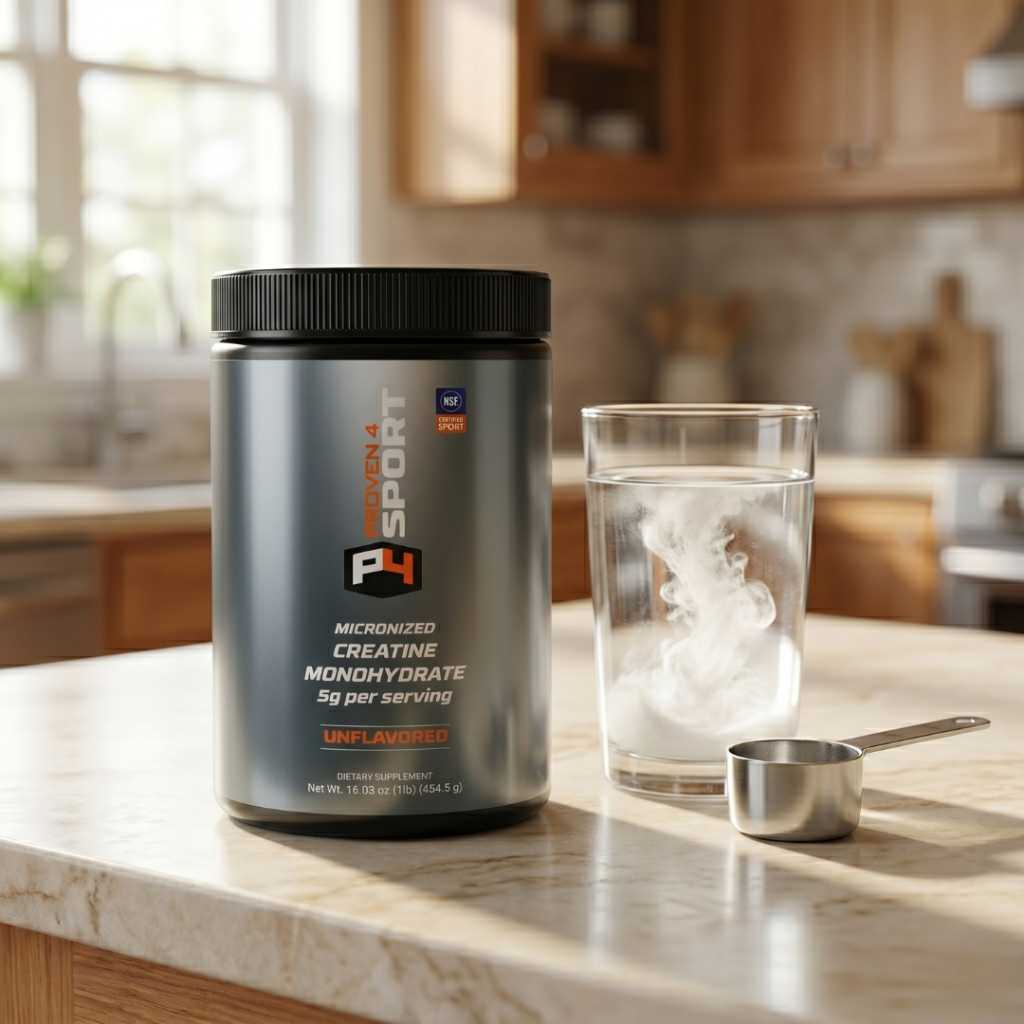
Proven4 Creatine Monohydrate is NSF Certified for Sport® — independently verified by a third party to confirm:
- Label accuracy — 5g of pure creatine monohydrate, nothing else
- No unsafe contaminants — tested for heavy metals, pesticides, and microbiological content
- Tested for 280+ banned substances — the same standard trusted by MLB, NHL, NFL, NBA, PGA, LPGA, and the U.S. military
For an older adult who may be managing other health considerations, this level of accountability matters. Every certified lot is listed publicly at nsfsport.com so you can verify your specific product.
Frequently Asked Questions
Is creatine safe for seniors and older adults? Creatine monohydrate has a strong safety record in healthy adults across decades of research. Studies published in the Journal of the International Society of Sports Nutrition confirm it does not cause kidney damage at recommended doses in healthy individuals. Always consult your doctor before starting any new supplement, particularly if you take medications or have existing health conditions.
Do you need to exercise for creatine to work after 50? No. While combining creatine with resistance training shows the strongest physical results, creatine also supports brain energy metabolism and cellular energy independently of intense exercise. Everyday activity — walking, golf, gardening — provides meaningful stimulus for creatine to function.
How long does it take to feel the effects of creatine? Most people notice gradual improvements in energy and endurance within two to four weeks of consistent daily use. Creatine builds up in muscle and brain tissue over time, so daily consistency is more important than how much you take on any single day.
Does creatine cause water retention or bloating in older adults? Some people experience mild intracellular water retention — meaning water drawn into muscle cells, not visible bloating. Using the recommended 5g daily dose without a loading phase minimizes this effect. Staying well hydrated throughout the day also helps.
Can women over 50 take creatine? Yes. Research specifically supports creatine for women over 50 for muscle mass preservation, bone density support, and energy during and after menopause — a time when these naturally decline. Creatine does not affect hormones or cause masculinization of any kind.
How is Proven4 creatine different from cheaper store brands? Proven4 Creatine Monohydrate is NSF Certified for Sport® — independently verified for purity, label accuracy, and banned substance testing. Many lower-cost creatine products have not been third-party tested and cannot verify what is actually in the container. For peace of mind and verified quality, the certification matters.
Conclusion: The Most Researched Supplement You Might Not Be Taking
Creatine monohydrate is not a trend. It is not a gym-only supplement. It is one of the most studied nutritional compounds in the world — with decades of peer-reviewed research supporting its role in muscle health, brain energy, and active aging.
If you are over 50 and looking for a simple, clean, and well-supported daily supplement, creatine deserves a serious look.
5 grams a day. Unflavored. Mixes into anything. 90-day supply. NSF Certified for Sport®.
That is it.
Shop Proven4 Creatine Monohydrate:
Sources
- Creatine Monohydrate Supplementation for Older Adults and Clinical Populations — PubMed, 2025
- Creatine Supplementation and Exercise in Aging: Muscle–Brain Axis — Frontiers in Nutrition, 2025
- Impact of Creatine and Exercise Training in Older Adults: Meta-Analysis — PMC, 2024
- Creatine on Muscular Strength and Lean Tissue in Aged: Meta-Analysis — PMC, 2025
- Effects of Creatine on Cognitive Function in Adults: Meta-Analysis — PMC/NIH, 2024
- Effects of Creatine Supplementation on Brain Function and Health — PMC/NIH, 2022
- Creatine and Cognition in Aging: Systematic Review — Oxford Academic, 2025
- Creatine Monohydrate Pilot in Alzheimer’s — PMC, 2025
- Creatine Supplementation as an Adjunct to Healthy Aging — Taylor & Francis, 2025
- NSF Certified for Sport® — nsfsport.com
These statements have not been evaluated by the Food and Drug Administration. This product is not intended to diagnose, treat, cure, or prevent any disease.